

Medical emergency? Call 912 (SAMU ambulance, free) or go to the nearest hospital emergency department now. Kigali Clinics is a booking service, not a hospital or clinic, and does not give medical advice.
Searching for hospitals in Kigali can be confusing, especially if you are new to the city. Should you go to a big referral hospital, a district hospital, a health centre or a private clinic? Where do emergencies go? What will your insurance pay for? This guide explains how health care is organised in Kigali, where different kinds of care usually happen, and how to choose a private clinic for everyday, non-urgent needs.
Kigali Clinics is a request and booking service for private clinic appointments. We do not rate or recommend specific hospitals or doctors. The public hospitals named in this guide are mentioned only as neutral, factual examples of where emergency and referral care takes place.
How health care is organised in Kigali
Rwanda's public health system is built in levels. At the community end are health posts and health centres, which handle common illnesses, maternal and child health, and basic care. Above them are district hospitals, and at the top are provincial, referral and specialised hospitals, which take more complex cases. RSSB's description of the facilities its members can use follows the same structure: health centres, district hospitals, and provincial, referral and specialised hospitals.
Alongside the public system is a large private sector: private hospitals, polyclinics with several specialties, specialised clinics (for example dental, eye or skin clinics), laboratories, imaging centres and pharmacies. Many people in Kigali use both: a health centre or public hospital for some needs, and a private clinic for convenience or a particular specialty.
| Type of facility | What it usually does | Typical use |
|---|---|---|
| Health post / health centre | Primary care, maternal and child health, common illnesses | First contact, especially with Mutuelle |
| District hospital | General hospital care, admissions, surgery, emergencies | Referral from a health centre, emergencies |
| Referral / teaching hospital | Specialist and complex care, teaching | Referral cases, serious emergencies |
| Private polyclinic | Several specialties, often a lab, outpatient care | GP visits, specialists, tests |
| Specialised private clinic | One area, such as dentistry or eye care | Planned, non-urgent appointments |
Public hospitals in the City of Kigali
The following public hospitals are among those located in the City of Kigali (Gasabo, Kicukiro and Nyarugenge districts). This is a neutral list for orientation, not a ranking:
- University Teaching Hospital of Kigali (CHUK), KN 4 Avenue, near the city centre. A university teaching hospital that describes its emergency room as part of the national referral pathway.
- King Faisal Hospital Rwanda, KN 544 Street. Describes itself as a multi-specialty quaternary hospital and states that its emergency unit is open 24/7.
- Rwanda Military Referral and Teaching Hospital.
- Kibagabaga Hospital.
- Muhima Hospital.
- Masaka Hospital.
- Nyarugenge Hospital.
- Kacyiru Police Hospital.
- Ndera Neuropsychiatric Teaching Hospital, for mental health care.
Kigali also has several private hospitals. Because we do not rate or promote individual facilities, we do not list them here. If you need a private specialist appointment, use the form and we look for a suitable licensed option.
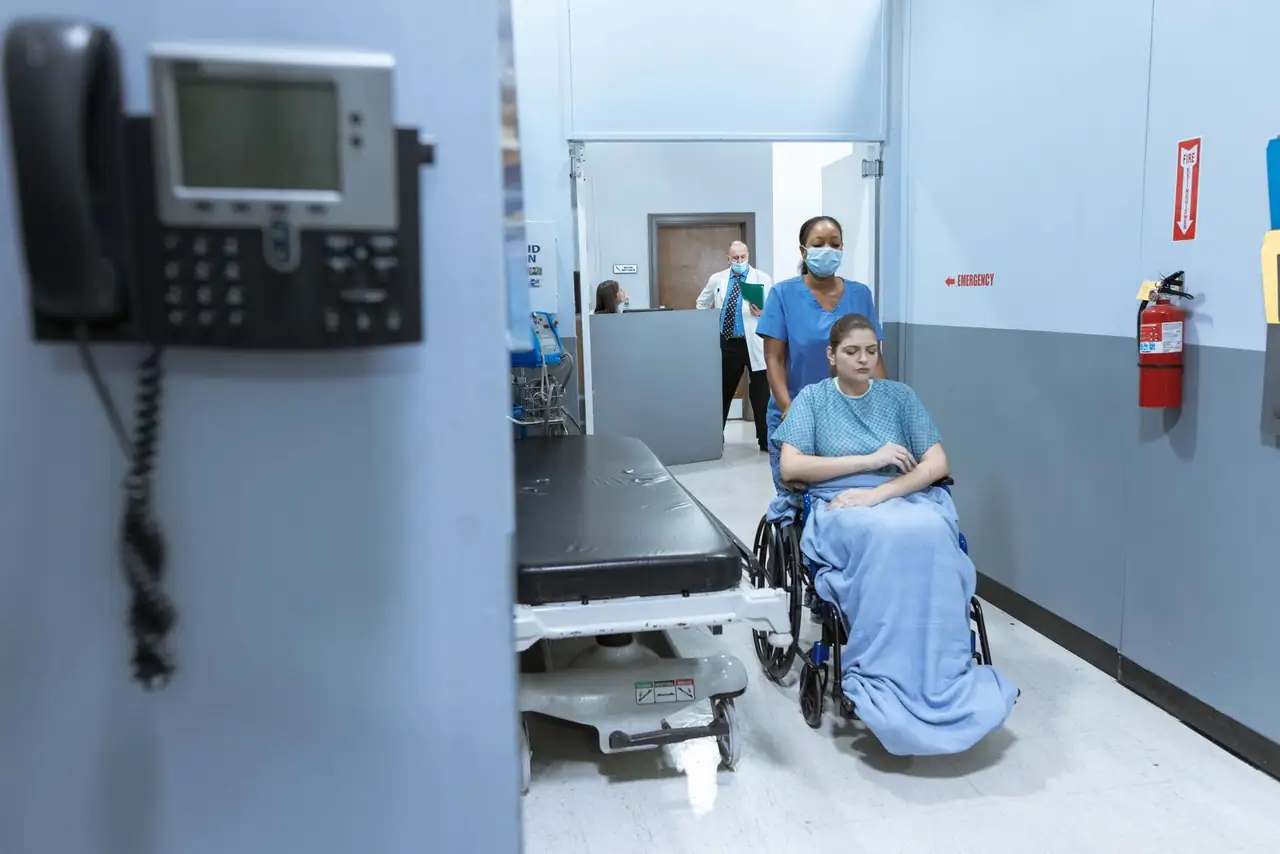
Emergencies: what to do
In a medical emergency, time matters more than choosing the "right" hospital.
- Call 912. SAMU, Rwanda's emergency medical service, was created by the Ministry of Health in 2007. It has grown into a nationwide network of more than 300 ambulances coordinated through a central dispatch centre, and 912 is free to call.
- Or go to the nearest hospital emergency department if you can get there quickly and safely. Do not drive yourself if you are seriously unwell.
- Know the warning signs. NHS guidance lists chest pain that feels crushing or squeezing, or spreads to the arm, neck or jaw, as a reason to call an ambulance. For stroke, remember FAST: Face drooping, Arm weakness, Speech difficulty, Time to call.
Save 912 in your phone now, and teach older children and household staff when to use it.
When a private clinic is the better choice
Hospitals are essential for emergencies and complex care, but they can be busy. For planned, non-urgent care, a private clinic is often faster and closer to home or work. Typical examples:
- a dentist for a check-up, cleaning or toothache that is not causing major swelling;
- an eye clinic for an eye test or new glasses;
- a dermatologist for acne, eczema or a mole check;
- a general practitioner for new symptoms, prescriptions or a referral;
- a children's doctor for a child who is unwell but alert and drinking;
- a health check-up for blood pressure, blood sugar and cholesterol.
If a clinic doctor finds something that needs hospital care, they refer you on.
Licensing: how to check a practitioner
Health professionals in Rwanda are regulated by professional councils:
- Doctors and dentists: the Rwanda Medical and Dental Council (RMDC), established in 2003, regulates medical and dental practice. It describes itself as the only authority that can accredit a medical or dental practitioner to operate in Rwanda, and it publishes updated licence lists on its website.
- Allied health professionals, such as physiotherapists: the Rwanda Allied Health Professions Council (RAHPC), which publishes licence verification information.
It is reasonable to ask a clinic which council the practitioner is registered with. A well-run clinic will not mind the question.
Choosing a private clinic: checklist
Use this checklist whether you book through us or on your own:
- Right service. Confirm the clinic offers exactly what you need. "Eye clinic", for example, can mean an optician or an eye surgeon.
- Licensed practitioner. Ask who you will see and their registration.
- Insurance accepted. RSSB pays only at accredited facilities contracted with it. Private insurers have their own lists. Ask before you go.
- Costs explained. Ask for the consultation fee and an estimate for tests or treatment.
- Tests on site? Find out whether the clinic has a laboratory, X-ray or ultrasound, or sends you elsewhere.
- Location and hours. Check how long the trip takes at your appointment time. Traffic towards Remera, Kacyiru and the city centre can be heavy at rush hour.
- Follow-up. Ask how you will get results and who to call if you get worse.
Paying for care in Kigali
How you pay often shapes where you go.
- RSSB medical scheme: RSSB pays 85% of eligible costs and the member pays 15%. Coverage is provided through accredited facilities contracted with RSSB, which include public facilities, private polyclinics, specialised clinics and hospitals, and pharmacies. RSSB lists more than 785 partner health facilities.
- Mutuelle de santé (community-based health insurance): managed by RSSB. Members can get treatment at health posts and health centres from RWF 200, and The New Times reports that members pay 10% of hospital bills, with Mutuelle covering the other 90%.
- Private insurance: benefits, limits and networks depend on your policy and insurer.
- Self-pay: prices vary between facilities. For a specific private clinic service, contact us for a current quote.
For a full explanation, read our health insurance guide for Rwanda.
Practical tips for a hospital or clinic visit
- Carry ID and your insurance card (RSSB, Mutuelle or private) every time.
- Bring previous results, hospital letters and a list of your medicines.
- Bring a referral letter if you have one. Referral hospitals often see specialist patients on referral.
- Have a way to pay your share of the bill, by mobile money or card where accepted.
- Write down questions before you go in, and the answers afterwards.
- Bring someone with you for important appointments if you can. A second pair of ears helps.
- Keep copies of prescriptions and receipts for insurance claims.
Getting around
Kigali's hospitals and clinics are spread across Gasabo, Kicukiro and Nyarugenge. CHUK is on KN 4 Avenue near the city centre and King Faisal Hospital is on KN 544 Street. Private clinics are found in many neighbourhoods, from Kimihurura, Kacyiru and Remera to Kicukiro, Kiyovu and Nyamirambo, so there is often one within reach of home or work. Before you set off, check the clinic's exact address on a map and allow extra time at rush hour. When you book, choosing a clinic close to home or work makes follow-up visits much easier.
If you are visiting Kigali
Visitors and business travellers sometimes need a doctor during a short stay. A few practical points:
- Check whether your travel insurance pays clinics directly or expects you to pay and claim later, and keep every receipt and report.
- Carry a list of your regular medicines with their generic names, and enough supply for your trip.
- Ask your hotel or host for the address of the nearest hospital emergency department when you arrive.
- For non-urgent problems, such as a minor infection, a toothache or a lost pair of glasses, a private clinic appointment is usually the simplest option.
Request a private clinic appointment
If your need is not an emergency, use the form on this page. Tell us what care you need, your preferred area and date, and how you will pay. We look for a suitable licensed private clinic and come back to you with options. For anything urgent, call 912.
Frequently asked questions
Which hospitals in Kigali have emergency departments?
Large public hospitals with emergency services include the University Teaching Hospital of Kigali (CHUK) on KN 4 Avenue, which describes its emergency room as part of the national referral pathway, and King Faisal Hospital, which states its emergency unit is open 24/7. In any emergency, call 912.
What is the emergency number in Rwanda?
Call 912 for the SAMU ambulance service. It was created by the Ministry of Health in 2007, is free to call, and coordinates more than 300 ambulances across the country through a central dispatch centre. The Ministry of Health also lists 114 as a health line.
Should I go to a hospital or a private clinic?
For emergencies, serious injuries and conditions needing admission, go to a hospital. For planned, non-urgent care such as a dental check-up, an eye test, a skin problem or a GP visit, a private clinic is often quicker and more convenient.
What is the difference between a clinic and a polyclinic?
In Kigali, 'clinic' usually means a smaller private practice, sometimes focused on one specialty such as dentistry or eye care. A polyclinic usually offers several specialties, and often a laboratory, under one roof. RSSB lists both polyclinics and specialised clinics among private facilities it works with.
How can I check a doctor is licensed in Rwanda?
Doctors and dentists are regulated by the Rwanda Medical and Dental Council (RMDC), which publishes updated licence lists on rmdc.rw. Allied health professionals, such as physiotherapists, are regulated by the Rwanda Allied Health Professions Council (RAHPC), which offers licence verification.
Do private clinics accept RSSB insurance?
Some do. RSSB says its medical scheme works through accredited health facilities contracted with RSSB, including private polyclinics, specialised clinics and hospitals, and lists more than 785 partner facilities. Always confirm with the clinic before your visit.
Can Kigali Clinics book a hospital appointment?
We focus on appointments at licensed private clinics. Referral hospitals often need a referral letter for specialist clinics. If you have a referral and are unsure where to go, contact us and we explain the options we know of.
Are there mental health services in Kigali?
Yes. Ndera Neuropsychiatric Teaching Hospital is one of the public hospitals in the City of Kigali, and many general practitioners can assess mental health concerns and refer you. If someone is in immediate danger, call 912 or go to an emergency department.